
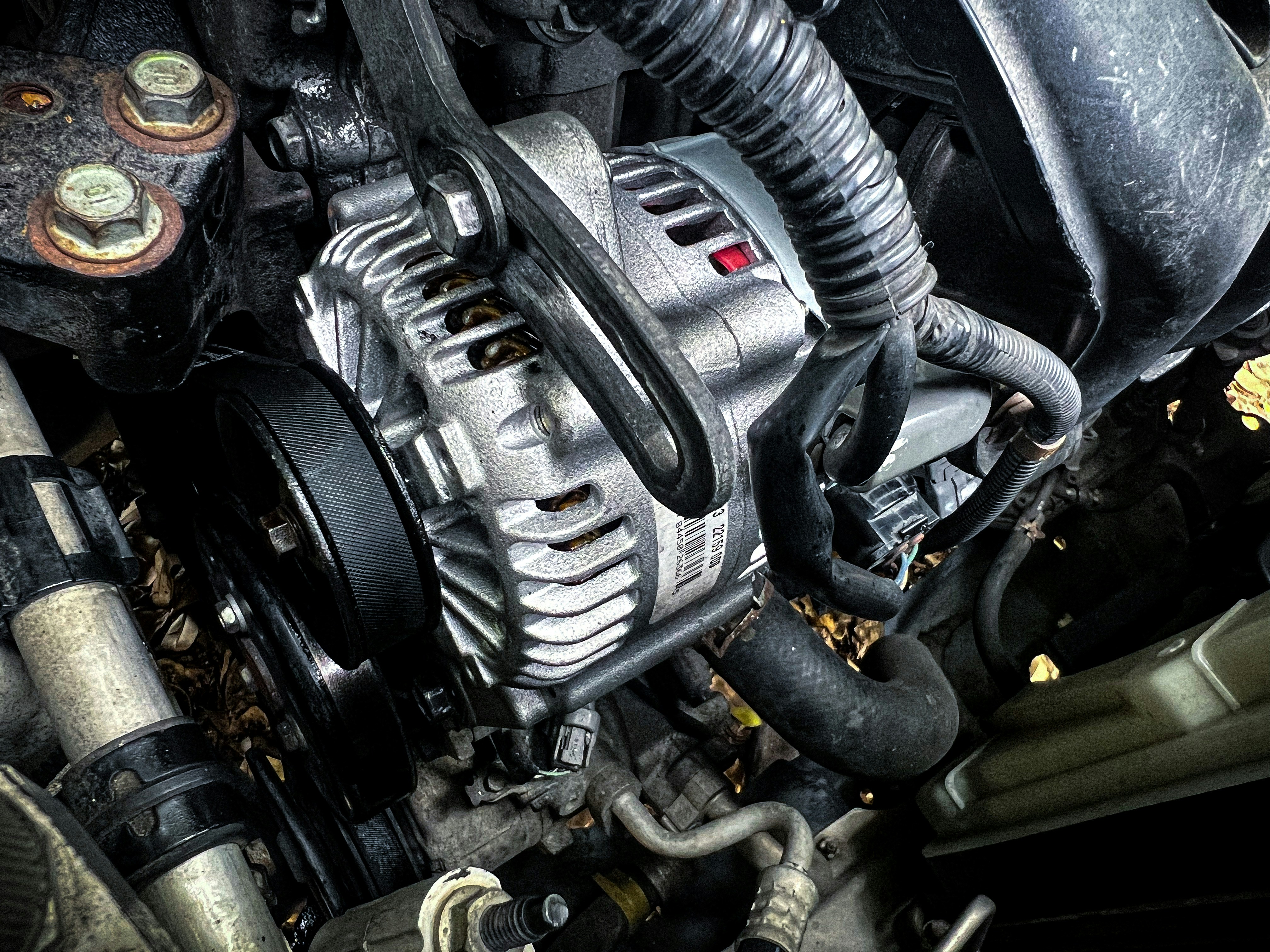
Introduction
A car alternator replacement may be necessary when the charging system can no longer keep the battery charged while the engine is running. Dimming headlights, a battery warning light, slow or unreliable electrical accessories, or a battery that repeatedly goes dead can all point to a charging-system problem. This guide explains what an alternator does, the main replacement types available, how to choose the right unit, and what to check before installation.
What It Is and How It Works
An alternator is an engine-driven generator that supplies electrical power while your vehicle is running. The serpentine belt turns the alternator pulley, causing the internal rotor to spin inside the stator and generate alternating current (AC). A rectifier converts that AC into direct current (DC), while the voltage regulator controls the alternator's output to help maintain the proper charging voltage.
The alternator's DC output recharges the battery and supplies power to the vehicle's electrical systems while the engine is running, including the headlights, climate controls, dashboard electronics, and infotainment system. When the alternator fails, the battery must supply the electrical load on its own and can quickly become discharged.
Common Alternator Replacement Types
Replacement alternators are available in several forms. Understanding the differences can help you choose a unit that matches your vehicle, budget, and electrical requirements.
- New (OE-spec) alternators: New units are manufactured to meet original-equipment specifications for output, mounting, pulley configuration, and electrical connections. Because they have not previously been used, they can be a straightforward replacement when the correct fitment is confirmed.
- Remanufactured alternators: These units are rebuilt from previously used alternator cores. The components are disassembled, inspected, cleaned, and replaced or refurbished as needed. Common wear items may include bearings, brushes, slip rings, and diodes. Quality and warranty coverage can vary by manufacturer, so check the supplier's specifications before buying.
- High-output alternators: These are designed to provide more electrical output than the factory alternator and can be useful for vehicles with substantial additional electrical loads, such as upgraded audio systems, auxiliary lighting, or other aftermarket equipment. Confirm that the vehicle's wiring, mounting, pulley, and charging system are compatible before upgrading.
- Internally regulated vs. externally regulated units: Most modern alternators have the voltage regulator integrated into the alternator, while some older or specialty applications use a separate external regulator. The replacement must use the regulation system specified for the vehicle because the wrong configuration can prevent proper charging.
How to Choose the Right Replacement Alternator
Correct fitment is the most important consideration when buying a replacement alternator. Match the vehicle's year, make, model, engine, and applicable trim or production specifications. Even vehicles with the same model name can use different alternators because of differences in engine configuration, mounting brackets, electrical connectors, or factory electrical equipment.
Next, check the alternator's rated output in amperes. The replacement should meet the vehicle manufacturer's required output, while vehicles with significant aftermarket electrical loads may require a higher-output unit. Also confirm the pulley configuration, including whether the application uses a conventional solid pulley or an overrunning alternator pulley (OAP). Using the wrong pulley can contribute to belt noise, vibration, or premature component wear. Finally, verify the connector, mounting points, pulley alignment, and electrical connections before purchasing so the replacement can be installed without unnecessary modifications.
Signs Your Alternator Needs Replacing
Flickering or dimming headlights and dashboard lights while the engine is running can indicate unstable charging voltage. Other common warning signs include a battery warning light, slow or inconsistent electrical accessories, unusual whining or grinding noises from the engine bay, or a battery that repeatedly goes dead even after being charged.
A burning rubber smell can indicate belt slipping or excessive friction, potentially caused by a seized or failing alternator pulley or bearing. A swollen, unusually hot, or damaged battery can also be associated with an overcharging condition caused by a charging-system fault. If the vehicle stalls after starting, electrical systems behave erratically, or multiple warning lights appear, have the battery and charging system tested before replacing components based on symptoms alone.
Installation Basics
Alternator replacement commonly involves disconnecting the negative battery cable, releasing the serpentine-belt tensioner, removing the belt from the alternator pulley, disconnecting the electrical connections, and unbolting the alternator from its mounting bracket. The exact procedure varies by vehicle. Before working around the alternator's main power connection, make sure the battery is disconnected to reduce the risk of an electrical short.
After installing the replacement, make sure the alternator is securely mounted, the electrical connections are properly tightened, and the serpentine belt is correctly routed and seated on every pulley. Correct belt tension is important because excessive slack can cause slipping and noise, while excessive tension can place unnecessary load on bearings and other components.
Many vehicles require specific torque values for alternator mounting bolts and electrical connections, so follow the owner's manual or manufacturer's service information. If the vehicle uses a serpentine-belt tensioner, use the appropriate tool and release it according to the manufacturer's procedure to avoid damaging the tensioner or surrounding components.
Common Mistakes to Avoid
- Buying based only on vehicle make and model without confirming the engine, production specifications, or exact alternator fitment.
- Ignoring the pulley configuration and installing a replacement with the wrong pulley type, which can contribute to belt noise, vibration, or premature wear.
- Choosing a higher- or lower-output alternator without considering the vehicle's original electrical requirements and any aftermarket accessories.
- Reusing a worn, cracked, or glazed serpentine belt after installing a new alternator when the belt is due for replacement.
- Skipping battery and charging-system testing, since a weak battery, poor electrical connection, damaged belt, or wiring problem can produce symptoms similar to alternator failure.
- Failing to verify connector and mounting compatibility before installation, which can turn a straightforward replacement into an unnecessary modification job.
Frequently Asked Questions
How do I know if it's the alternator or the battery?
Have both the battery and charging system tested rather than relying on symptoms alone. A battery that fails a proper load or conductance test may need replacement, while low or inconsistent charging output with the engine running can indicate an alternator or another charging-system problem. Testing both components helps identify the actual cause.
Can I install a remanufactured alternator instead of a new one?
Yes. A remanufactured alternator can be a suitable replacement when it is correctly specified for your vehicle and comes from a reputable supplier. Before buying, confirm the output rating, connector, mounting configuration, pulley type, warranty, and other applicable fitment specifications.
Does a higher amperage rating always mean better performance?
Not necessarily. A higher-rated alternator can provide additional electrical capacity when the vehicle has increased electrical demands, but it does not automatically improve performance on a standard vehicle. The replacement should be compatible with the vehicle's charging system, wiring, control strategy, and electrical requirements.
How do I know which pulley type my vehicle uses?
Check the original alternator's part number and the vehicle manufacturer's service or parts information to identify the correct pulley configuration. Some applications use a conventional solid pulley, while others use an overrunning alternator pulley (OAP). If you are unsure, match the original part number or use verified vehicle-specific fitment information rather than relying only on how the pulley feels when turned by hand.
Ready to Shop
Choosing the right car alternator replacement starts with verified fitment, the correct output rating, and the proper pulley and electrical configuration. If you notice charging-system warning signs, test the battery and charging system before replacing parts based on symptoms alone. When installation is required, use the correct belt routing, torque specifications, and safety procedures to help ensure reliable operation.
Ready to find the right products for your vehicle? Browse our Automotive collection.
Shop Automotive Now