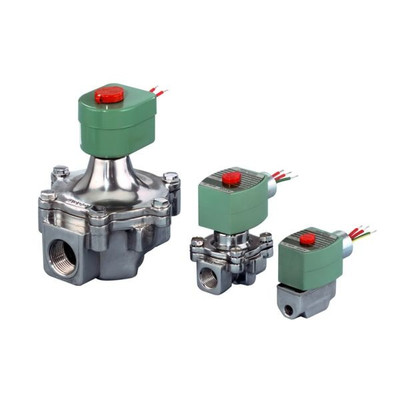
80-90VDC 3/4" 2-WAY N.C. GAS SOLENOID BLOCKING VAL
Whether you use this to control a valve in an electrical circuit or to control drain valves on boilers, the ASCO 80-90VDC 3/4" 2-WAY N.C. GAS SOLENOID BLOCKING VALVE has your needs covered. The non-corrosive metal construction resists rusting and corrosion. The plastic handle provides easy operation each time.
Our 102460 80-90VDC 3/4" 2-WAY N.C. GAS SOLENOID BLOCKING VALVE is ideal for use in electric gas and oil fired or dual fuel burners where the primary control valve is a solenoid valve, but manual override is desired and required when the control circuit goes out.
This 80-90VDC 3/4" 2-WAY N.C. Gas Solenoid Blocking Valve is designed to isolate gas supply from low pressure systems that are downstream of a high pressure system. This solenoid valve opens when the gas pressure falls below 1.5 in. w.c., and closes when the pressure rises above 1.5 in. w.c.. If there is an interruption in the pressure, e.g., caused by a power failure or flood, this valve will automatically open and allow the gas flow to stop, preventing unsafe conditions (such as equipment shutdowns) that
The ASCO 102460 80-90VDC 3/4" 2-WAY N.C. gas solenoid blocking valve is designed to provide excellent performance for consistent, reliable service. It features a lead free solder connection and is designed with a non-metallic diaphragm and stem for maximum resistance to shock, vibration and static electricity.
80-90vdc 3/4" 2-way n.c. gas solenoid blocking valve and electromagnetic solenoid valves, pneumatic push to connect connectors and actuators.
When you're working with gas, you need a tool that's safe and reliable. The 102460 80-90VDC 3/4" 2-Way N.C. Gas Solenoid is perfect for use with gas supply lines in Trim, Venting or Appliance applications. This solenoid meets all applicable codes and standards.
A GAS SOLENOID BLOCKING VALVE uses a supply of natural gas or propane to toggle between two states (on and off). When the valve is activated into an open position, the pressurized gas acts upon its piston to move it via outside forces from either the increase or decrease of volume. The net result is an immediate change from one state to another in the form of the movement of the valve's fastener.



 Free Shipping
 In stock