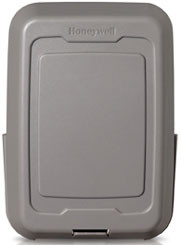
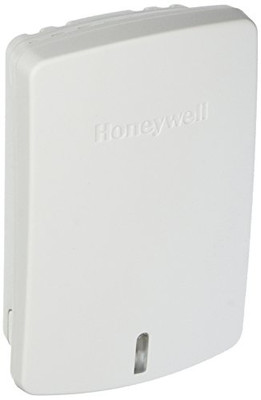
PRESSURETROL WITH A .5-9 PSI RANGE
The Pressuretrol gives you the capability to precisely control heat output without wasting fuel. This handy controller is ideal for furnaces, boilers, and some space heaters. It features a .5-.9 psi range and 2.0" sweep face with large easy-to-read numbers.
The Honeywell Pressuretrol Controller is used to control pressure switch type unit heaters. This controller gives you the ruggedness and reliability of a Honeywell pressure switch with the versatility of adjusting your heat's output. The adjustable range on this model goes from .5-9 psig.
The Honeywell 2361 is a Pressuretrol Controller which is used with electric unit heaters. The lower range of the unit (1-5 psi) will be most useful in a radiant type heater where the temperature can be regulated by adjusting the mA to the heater. The higher range of the Pressuretrol (1-9 psi) is used in gas fired heaters where there is a single power burner that runs at whatever heat setting you place it in.
Pressuretrol is a manual on-off high-low pressure switch that will prevent damage to the water heater caused by pressure buildup in the system when the heating demand varies from the normal household load. Pressuretrol can be used with all heating system that operate at pressures of 1/2 psi or greater.
HONEYWELL PRESSURETROL CONTROLLER, TYPE 231, HEATTROL SERIES I, 2-POLE 24V DC WITH THE FOLLOWING MODIFICATIONS. (1) OBSERVE ALL RULES AND CODES PERTINENT TO INSTALLATION OF AUTOMATIC EQUIPMENT ON MUNICIPAL WATER SUPPLIES. (2) REDUCE MAXIMUM SET POINT TO 10 PSIG. (3) EXCHANGE THE OVERLOAD RELAY FOR A FIELD SWITCH (4) SUBSTITUTE AP
Pressuretrol controller features adjustable thermostat and wired for two stage heating with support bracket and pressure switch
Pressuretrol is designed for a variety of heating appliance applications. The Pressuretrol is a proportionalontroller which means that the valve will respond to changes in sensor pressure by changing the proportion of gas flowing to the burner(s). Pressuretrol provides comfort and energy savings by modulating gas flow in response to changes in indoor temperature due to occupancy, outdoor temperature changes, or humidity changes.



 Free Shipping
 In stock